Pinch of Yum Food Blog and Recipes Website Makes $65,877 Per Month
Food blogging is more than publishing recipes. Successful food websites combine recipe creation, SEO, photography, audience building, advertising, sponsorships, affiliates, and digital products.
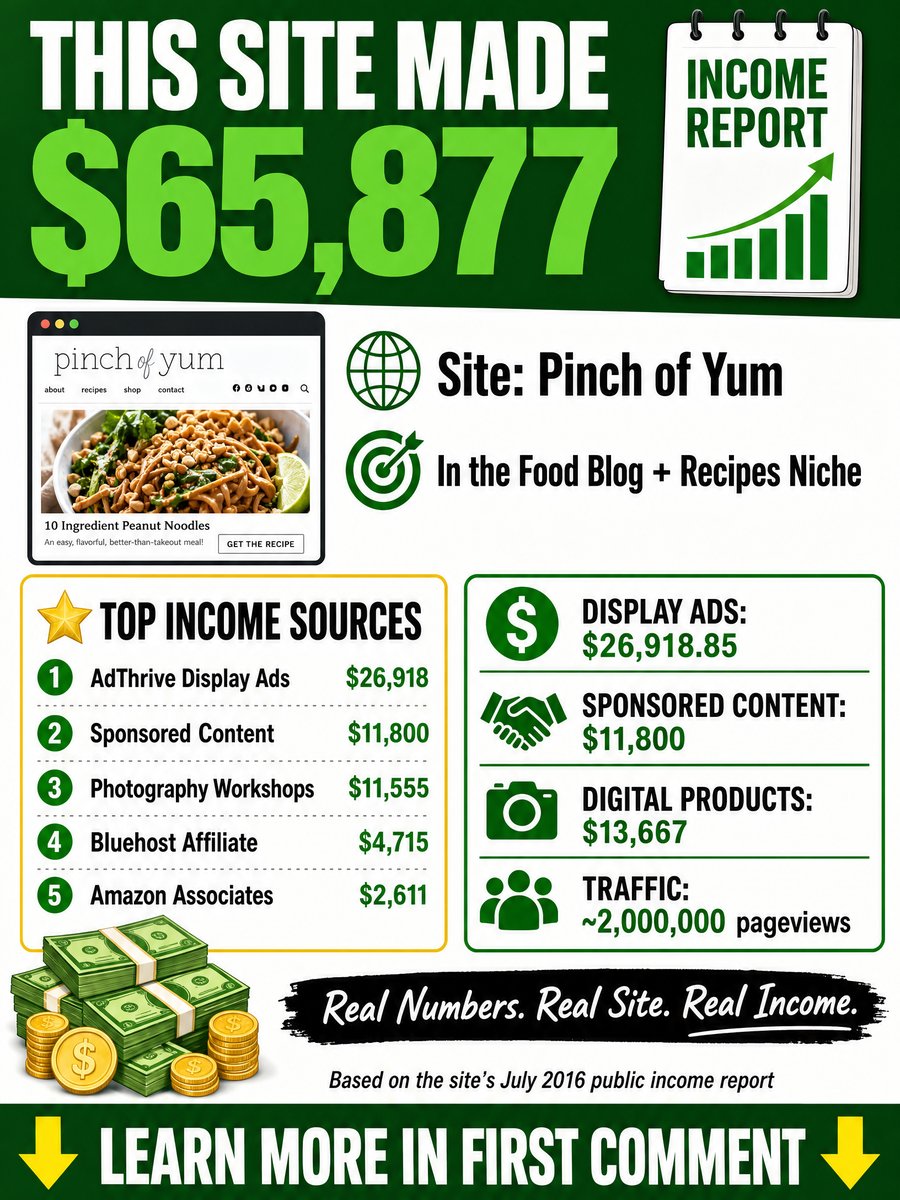
Pinch of Yum demonstrates this model. Based on the July 2016 income report figures provided, the site generated about $65,877 from around 2 million pageviews, with revenue from display ads, sponsored content, photography workshops, Bluehost affiliates, and Amazon Associates.
The key lesson is that recipe traffic can support multiple income streams. Search-driven content can earn ad revenue, product-focused articles can generate affiliates, photography expertise can become paid products, and a trusted audience can attract brand partnerships.
Site Snapshot
| Metric | Details |
| Website | Pinch of Yum |
| Primary Niche | Food Blog + Recipes |
| Related Topics | Home Cooking, Food Photography, Recipe Development, Blogging |
| Revenue Figure Reported | $65,877 |
| Traffic Figure Reported | ~2,000,000 Pageviews |
| Largest Named Income Source | AdThrive Display Ads |
| Display Ads | $26,919 |
| Sponsored Content | $11,800 |
| Digital Products | $13,667 |
| Report Basis | July 2016 Public Income Report |
Why the Food Blog and Recipes Niche Is So Profitable
Food is an evergreen niche because people constantly search for recipes, meal ideas, cooking tips, and food inspiration. A strong recipe can attract traffic for years through search and social platforms.
The audience is also broad, including families, students, professionals, and home cooks. Since food is highly visual, quality photography can improve engagement, clicks, and audience growth.
Popular content areas include:
- Quick dinner recipes
- Healthy meals
- Pasta and noodle recipes
- Chicken recipes
- Vegetarian dishes
- Desserts
- Breakfast recipes
- Meal-prep ideas
- Family dinners
- Seasonal recipes
- Holiday cooking
- Kitchen tips
- Food photography
- Recipe blogging
This combination of evergreen search demand, strong visual appeal, repeat readership, and commercial opportunities makes recipe publishing an attractive content business.
Revenue Breakdown From the July 2016 Report
The report identifies several major revenue streams rather than relying on one source. That diversification is important because advertising, sponsorships, products, and affiliate programs can perform differently throughout the year.
The five largest individual income sources listed are:
| Top Income Source | Amount |
| AdThrive Display Ads | $26,918 |
| Sponsored Content | $11,800 |
| Photography Workshops | $11,555 |
| Bluehost Affiliate | $4,715 |
| Amazon Associates | $2,611 |
These five sources total less than the full $65,877 headline figure, which means the report’s top-five list does not represent every dollar of income generated during the period.
A separate summary groups some of the revenue into broader categories:
| Revenue Category | Amount |
| Display Ads | $26,919 |
| Sponsored Content | $11,800 |
| Digital Products | $13,667 |
| Traffic | ~2,000,000 Pageviews |
The $13,667 digital-products figure is larger than the $11,555 photography-workshop amount, indicating that workshops made up most, but not necessarily all, of that broader category.
The important takeaway is that Pinch of Yum was not simply an ad-supported recipe site. Advertising was the largest individual source, but sponsorships, educational products, and affiliates also made meaningful contributions.
How Pinch of Yum Makes Money
The Pinch of Yum model succeeds because different content types support different revenue streams:
- Display Advertising: Recipe traffic from search can generate scalable ad revenue.
- Sponsored Content: Brand partnerships allow companies to reach a large food-focused audience.
- Photography Education: Skills and expertise can be turned into workshops or digital products.
- Affiliate Marketing: Product recommendations can earn commissions when readers make purchases.
This diversified approach creates a stronger business than relying on a single income source.
Display Advertising Is the Largest Named Revenue Source
AdThrive Display Advertising generated approximately $26,918.85, making it the largest reported income source.
- Recipe traffic scales well: Visitors often spend time reading ingredients, instructions, substitutions, and related recipes, creating multiple ad opportunities.
- Evergreen content compounds: Hundreds of recipes can attract consistent traffic from searches like dinner ideas, desserts, and meal inspiration.
- Small wins add up: A publisher does not need one viral recipe; a large library of useful content can gradually create significant traffic and revenue.
Sponsored Content Adds Significant Revenue
Sponsored content contributed $11,800, making brand partnerships another major part of the business. Food publishers are attractive to advertisers because readers frequently make purchasing decisions involving groceries, kitchen products, cooking tools, and household goods.
Potential sponsorship categories naturally include:
- Food brands
- Grocery companies
- Kitchen appliances
- Cookware
- Meal services
- Ingredient companies
- Beverage brands
- Food-storage products
- Kitchen accessories
A sponsored recipe can integrate a product directly into something readers already want to make. That can be more engaging than a traditional banner advertisement because the brand becomes part of useful content.
However, sponsorships work best when they fit naturally. A publisher should still maintain editorial standards and clearly disclose paid partnerships. Trust is far more valuable than accepting every available sponsorship.
Photography Workshops Turn Expertise Into a Product
Photography workshops generated $11,555, showing how a publisher can monetize skills developed while building the website.
- Skill-based products: Food photography expertise can become workshops, courses, guides, presets, or educational resources.
- Two audiences: Recipes attract home cooks, while photography content attracts creators who want to improve their own work.
- Broader lesson: The skills gained while growing a content business can become valuable products themselves.
Affiliate Marketing Adds Commercial Revenue
Affiliate marketing also contributed meaningful income, with Bluehost ($4,715) and Amazon Associates ($2,611) listed as sources.
- Bluehost: Fits blogging content because aspiring food bloggers may need hosting.
- Amazon Associates: Fits recipe and kitchen content through recommendations for tools, appliances, and cooking products.
Best strategy: Affiliate links should match the reader’s intent and solve a problem rather than exist only for commissions.
Popular Affiliate Programs
The July 2016 report specifically identifies Bluehost and Amazon Associates, so these are the clearest affiliate examples connected to the Pinch of Yum business model.
Affiliate Program Breakdown
| Affiliate Program | Relevant Category | Income Reported |
| Bluehost | Web Hosting / Blogging | $4,715 |
| Amazon Associates | Kitchen Tools and General Products | $2,611 |
Bluehost makes sense for a food publication that also teaches aspects of blogging or content creation. A reader who wants to launch a recipe website needs hosting, a domain, and publishing tools.
Amazon Associates fits the consumer side of the business. Recipe publishers can naturally reference tools such as baking pans, blenders, food processors, knives, storage containers, or other kitchen equipment when relevant.
Since affiliate programs and commission structures change over time, creators should verify current terms before relying on any specific program. The more important lesson is to choose affiliate offers that fit the subject and solve genuine reader needs.
Content Strategy That Can Drive Two Million Pageviews
Reaching roughly 2 million pageviews requires a substantial content library and consistent publishing strategy. Recipe traffic generally comes from many individual searches rather than one broad keyword.
A successful food publisher can build clusters around ingredients, meal types, dietary preferences, cooking methods, and occasions. For example, one chicken recipe can lead to an entire collection of chicken dinners, meal-prep recipes, healthy chicken dishes, and quick weeknight meals.
Strong content categories might include:
- 30-minute dinners
- Easy pasta recipes
- Healthy lunches
- Vegetarian meals
- One-pot recipes
- Slow-cooker recipes
- Family dinners
- Meal-prep recipes
- Holiday desserts
- Summer recipes
- Comfort food
- Budget meals
Each category can contain dozens of related recipes, creating natural internal links and giving readers reasons to browse additional pages.
The content also needs to remain practical. Clear ingredients, understandable instructions, useful substitutions, and appealing photography matter more than filling pages with unnecessary text.
Food Photography Is a Major Competitive Advantage
Food blogging is a niche where photography strongly influences performance because images communicate taste, texture, and presentation.
- Better visuals improve engagement: High-quality photos can increase clicks, shares, saves, and brand recognition.
- Photography can become a product: Skills developed for recipes can create additional income through workshops or courses.
- Technique matters more than equipment: Lighting, composition, styling, editing, and consistency are often more important than owning expensive gear.
Keyword Opportunities
Recipe websites can target thousands of specific searches because food queries are highly varied. Instead of competing only for enormous keywords such as “dinner recipes,” a publisher can target more specific needs.
Potential keyword themes include:
- easy peanut noodles
- quick vegetarian dinner
- healthy noodle recipes
- easy weeknight meals
- chicken dinner ideas
- vegetarian meal prep
- easy pasta recipes
- healthy lunch ideas
- simple family dinners
- quick dinner recipes
- one-pot meals
- summer salad recipes
Longer and more specific searches often give newer publishers better opportunities to rank while still attracting readers with clear intent.
Recipe collections can then connect these individual pages into broader hubs such as “25 Easy Weeknight Dinners” or “20 Quick Vegetarian Recipes.”
SEO Strategy for a Food Blog
SEO is a major traffic opportunity for recipe websites because people constantly search for cooking ideas and instructions. A useful recipe can bring visitors for years when properly optimized.
- Match search intent: Give readers the exact recipe information they are looking for instead of unrelated content.
- Optimize the experience: Use clear titles, recipe details, internal links, fast images, mobile-friendly pages, and updated content.
- Build topic authority: Cover related recipes deeply rather than publishing random topics.
- Prioritize quality: SEO attracts visitors, but great recipes and visuals encourage them to return.
Why This Business Model Works
The Pinch of Yum model works because each part of the business reinforces the others. Recipes attract a large consumer audience. That audience generates advertising and sponsorship revenue. Strong photography improves recipe performance and becomes the foundation for workshops. Blogging experience creates opportunities for hosting affiliates. Kitchen-related content creates product-affiliate opportunities.
The model therefore has several advantages: food has evergreen demand, recipes can generate search traffic for years, photography performs well visually, advertisers value large food audiences, and publishers can develop products based on skills acquired while growing the website.
Most importantly, the business does not depend entirely on one source. If advertising revenue changes, sponsorships, affiliates, and products provide additional support.
Lessons for Content Creators
A new food blogger does not need millions of pageviews immediately. The focus should be building useful recipes around a clear niche, with strong instructions, original photography, consistent publishing, and SEO-friendly topics.
- Use relevant monetization: Recommend products that genuinely help readers, choose fitting sponsors, and create educational products based on real expertise.
- Prioritize trust: The most valuable recipe websites grow because readers return for reliable content, not just because they discover a single page through search.
Conclusion
The Pinch of Yum Food Blog and Recipes Website report demonstrates how a recipe publisher can combine high-volume traffic with several complementary revenue streams. According to the July 2016 figures, the site generated approximately $65,877 from around 2 million pageviews.
The largest named income source was AdThrive display advertising at roughly $26,918.85, followed by $11,800 in sponsored content and $11,555 from photography workshops. Bluehost contributed $4,715, while Amazon Associates contributed $2,611. A broader summary also lists $13,667 in digital products, showing that owned educational products played an important role alongside advertising and sponsorships.
The most useful lesson is that a food blog can become much more than a recipe archive. Strong recipes attract readers, visual content helps those recipes stand out, advertising monetizes scale, sponsorships monetize brand relationships, affiliates monetize relevant purchases, and expertise can be transformed into digital education.
Key Takeaway: Pinch of Yum shows how a Food Blog and Recipes Website can monetize through recipe traffic, ads, sponsorships, photography products, and affiliates. The July 2016 report’s 2 million pageviews and $65,877 revenue highlight the value of evergreen content and diversified income streams.
Leave a Reply